
Foundry & craftsmanship · Bärau
From fire and bronze.
Cast with experience.
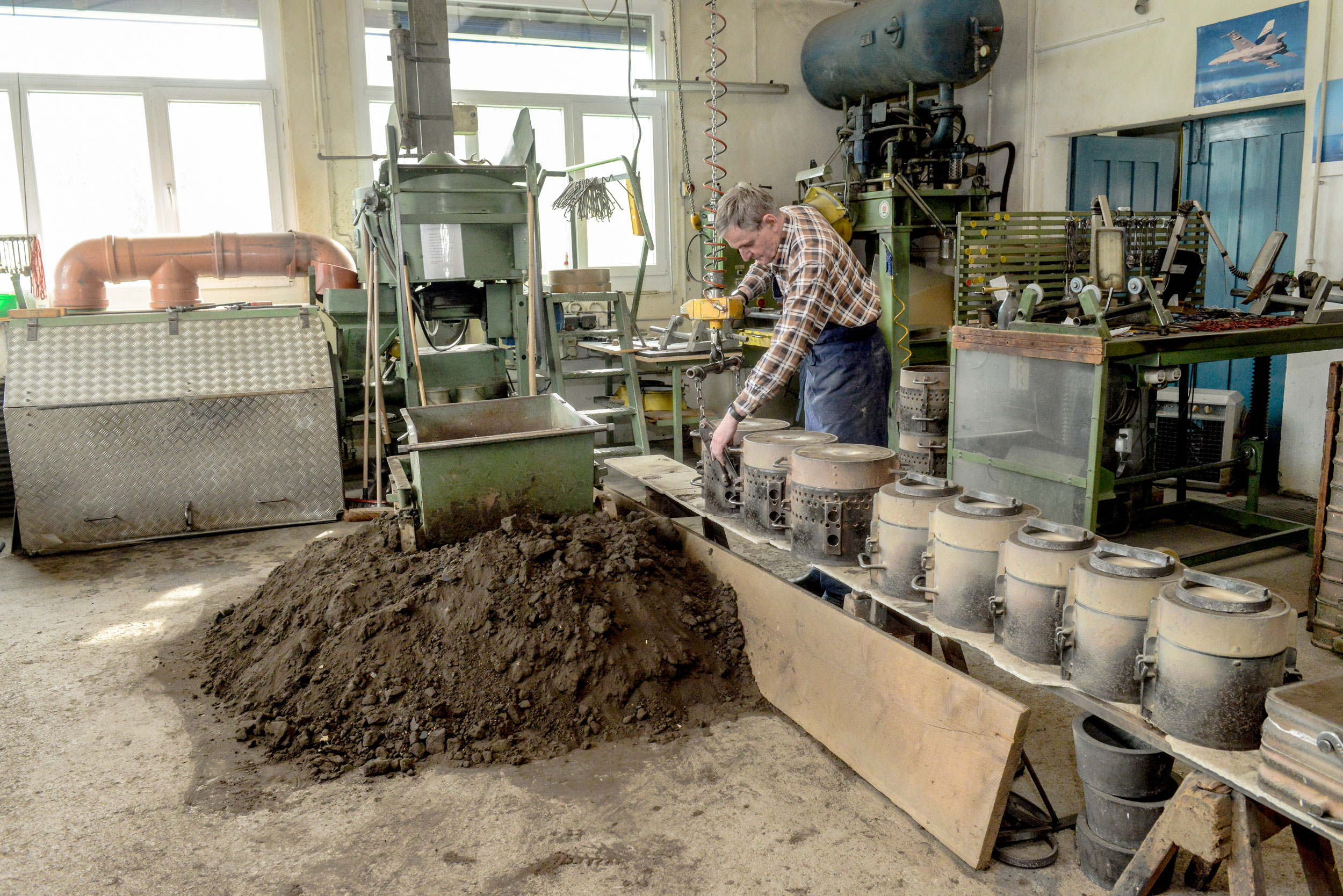
At our foundry in Bärau, Berger bronze bells are cast in sand moulds. Here we show you how they are made – from preparing the mould to the finished bell.

Tradition since 1730
Our own bronze foundry in the Emmental
Every sand mould is used only once
A look inside our foundry
Craftsmanship you can
see and hear.
Our company film shows bell casting in Bärau: fire, moulding sand, molten bronze and work done by hand.
Our company film “Craftsmanship in action – tradition since 1730”. Please enable YouTube content to play it.
From moulding sand to casting
A new mould
for every bell.
A bronze bell cannot simply be lifted out of its mould. After casting, the sand mould is broken open. Work starts afresh for the next bell.
01 / THE MATERIALS
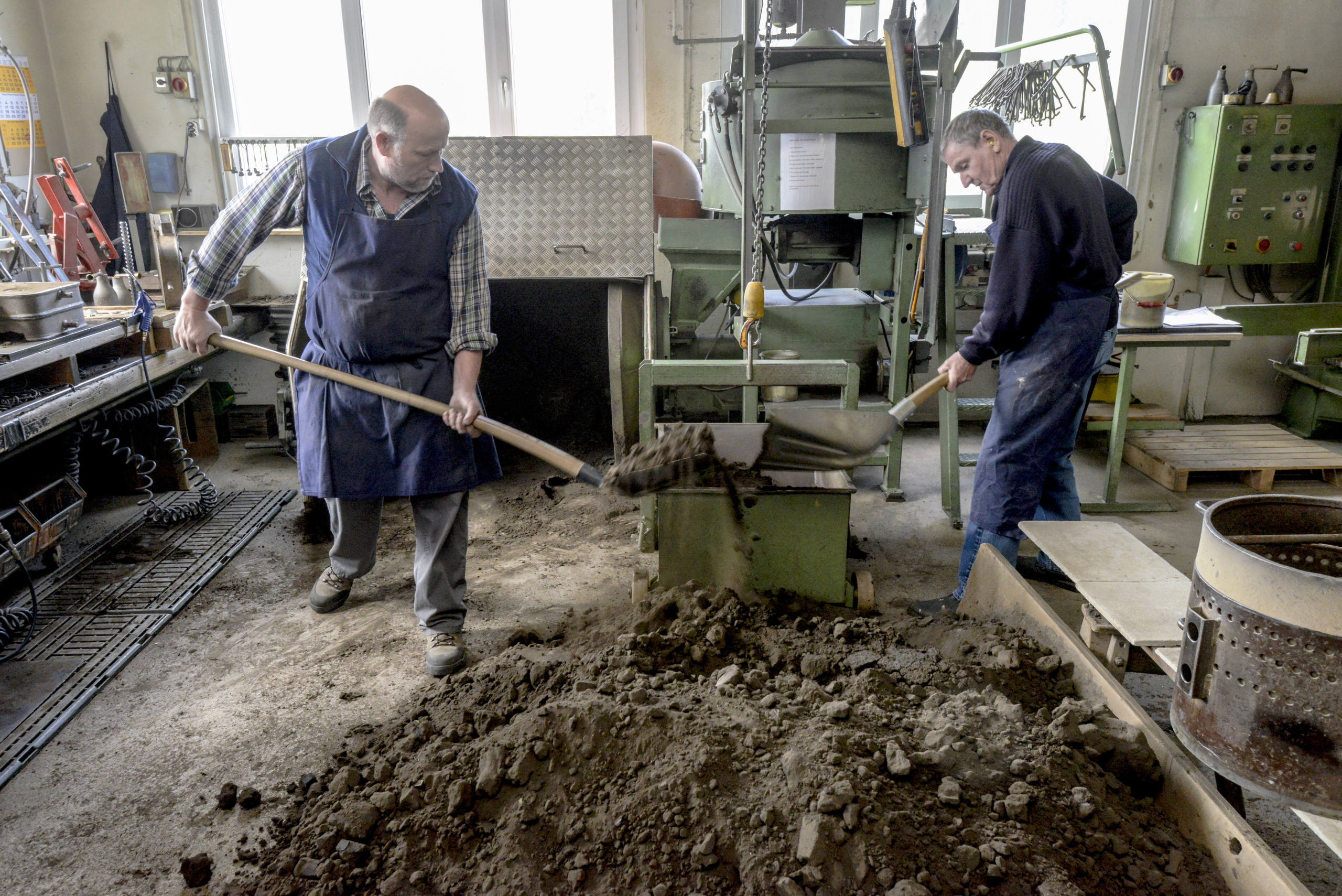
Bronze and moulding sand
It starts with the bronze alloy and carefully prepared moulding sand. Both must be suitable for the casting. The sand holds the shape and determines the surface of the finished bell.
02 / MOULDING
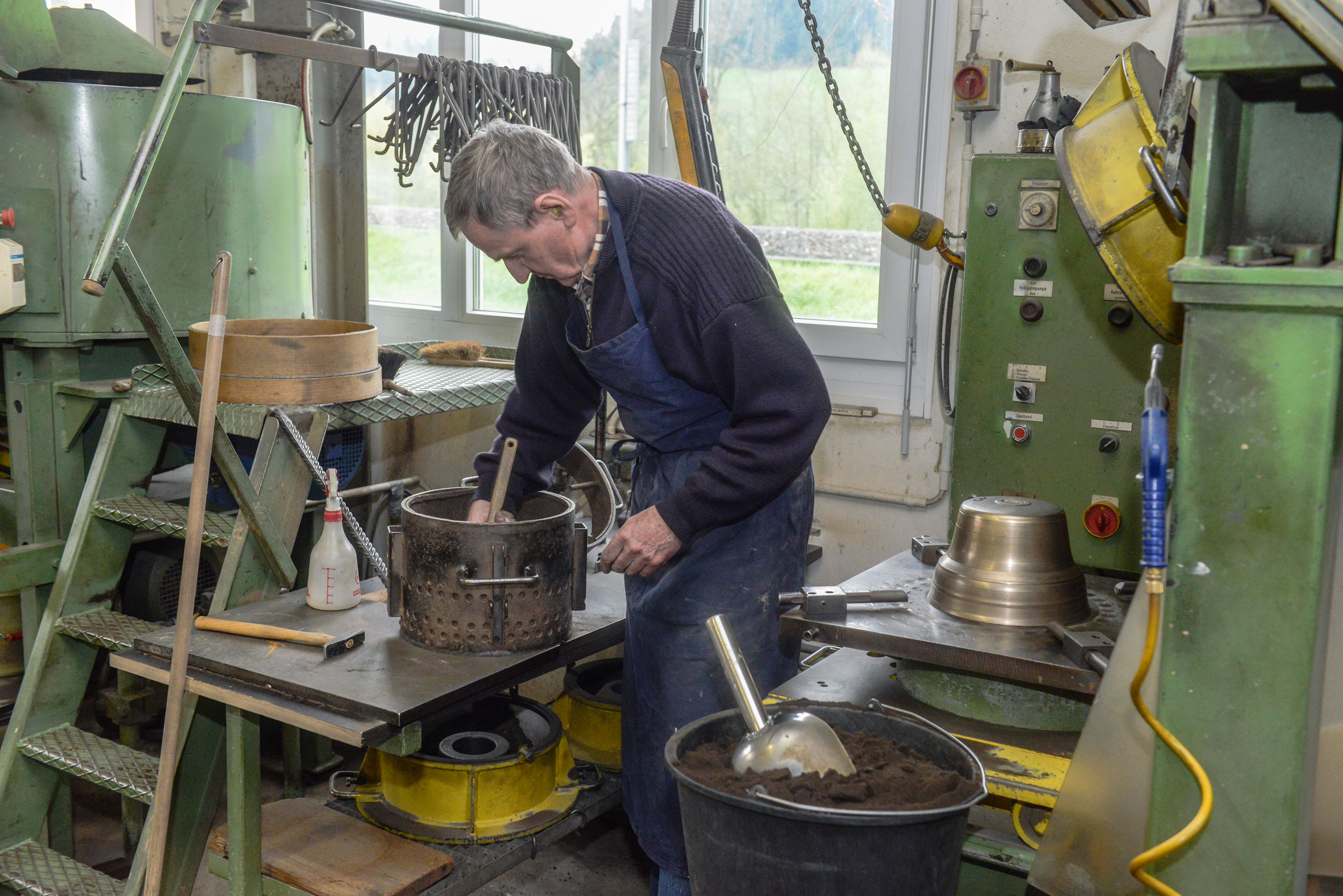
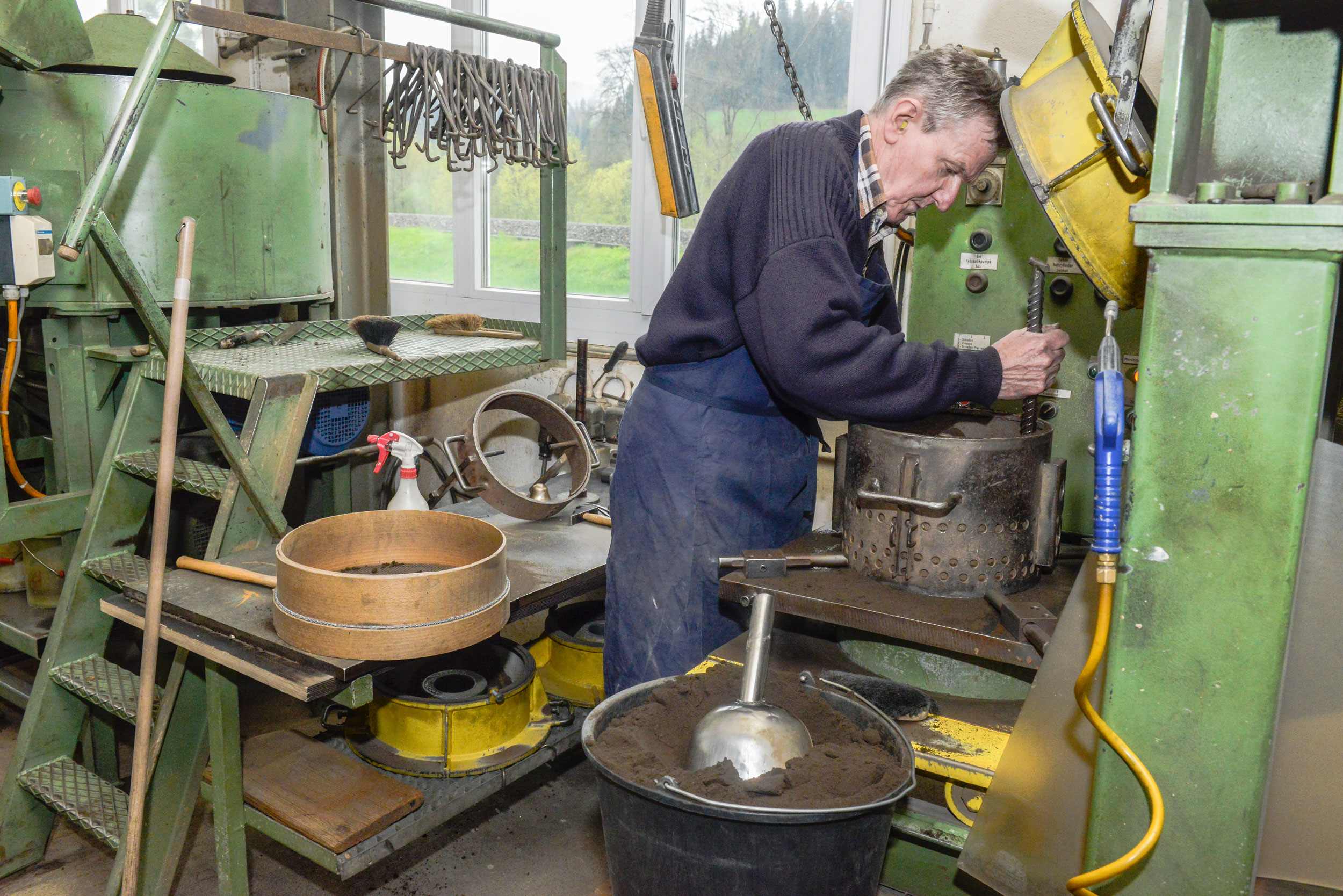
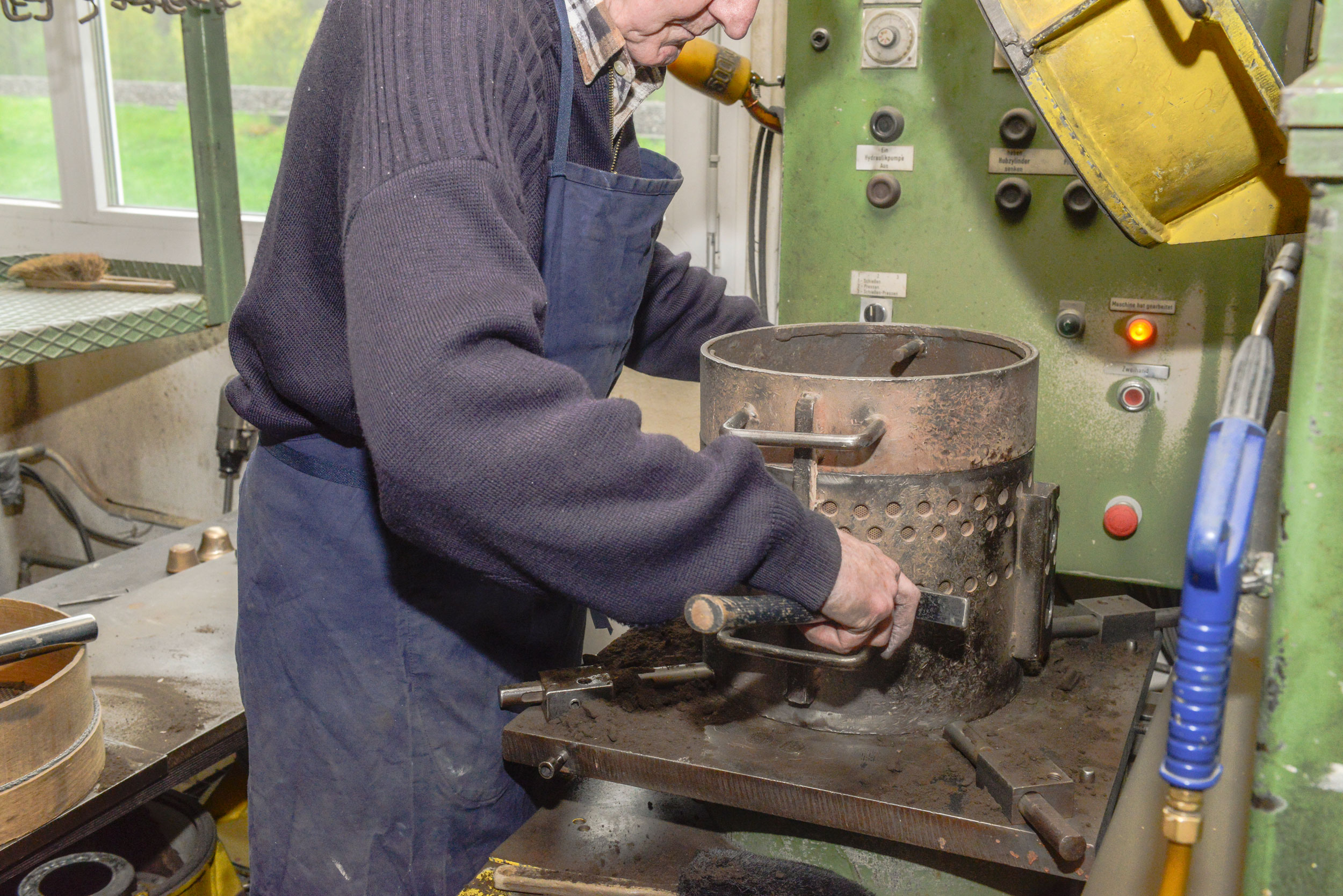
Outer mould and core
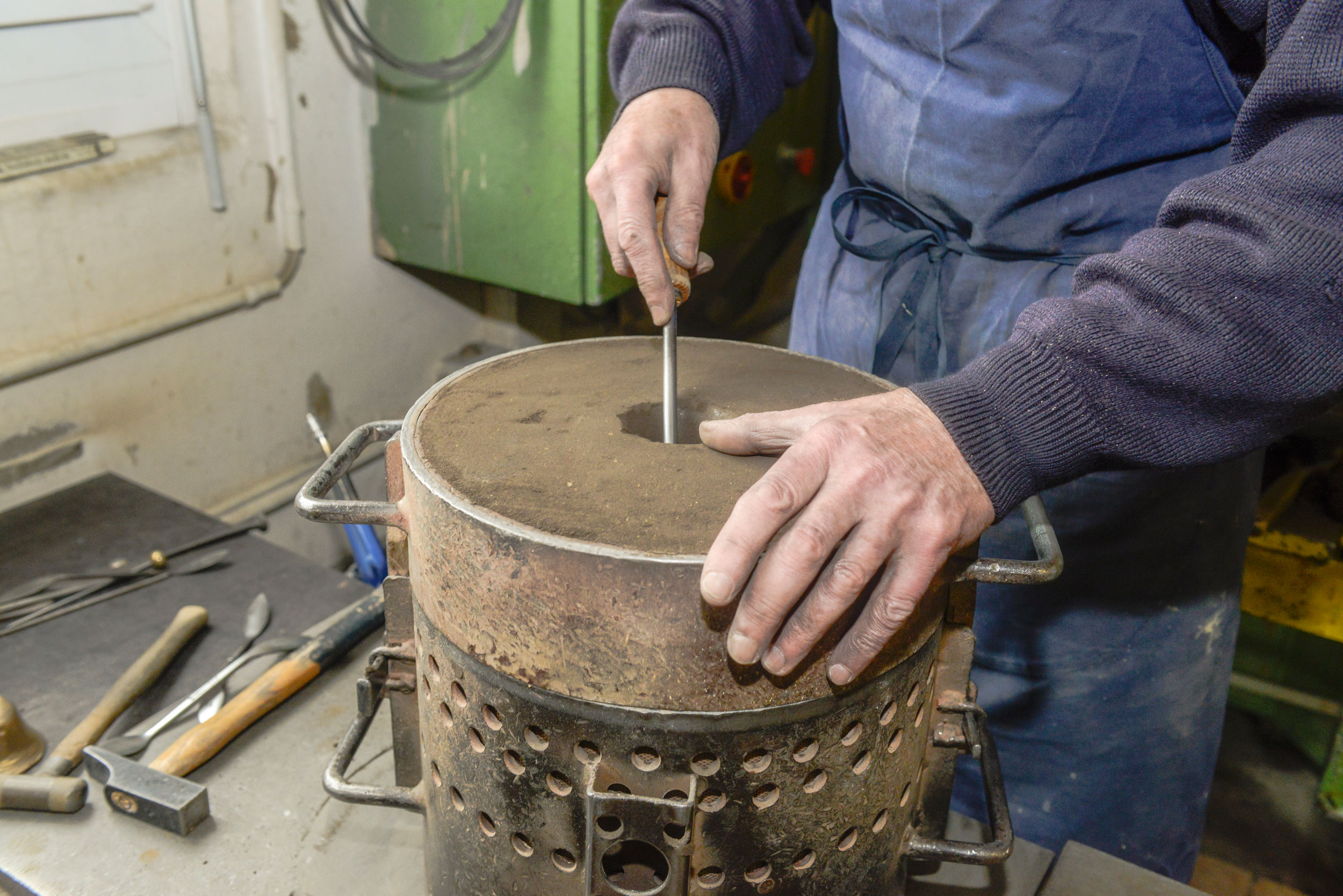
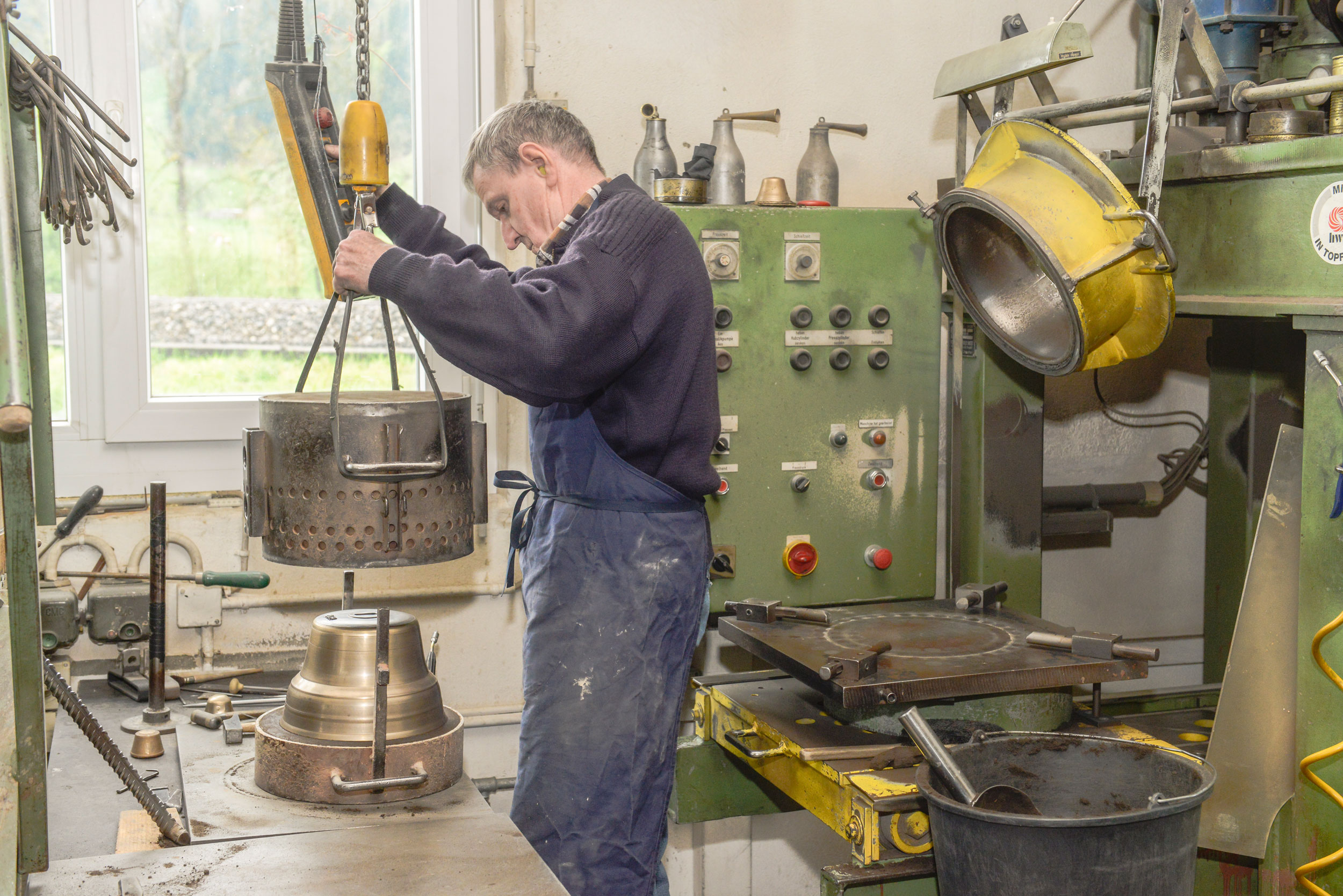
A bell pattern is used to make the outer mould and the inner core. Sand is added and compacted by hand. Pouring and venting channels are formed, and the pattern is then carefully removed.
03 / PREPARATION
Closing the mould
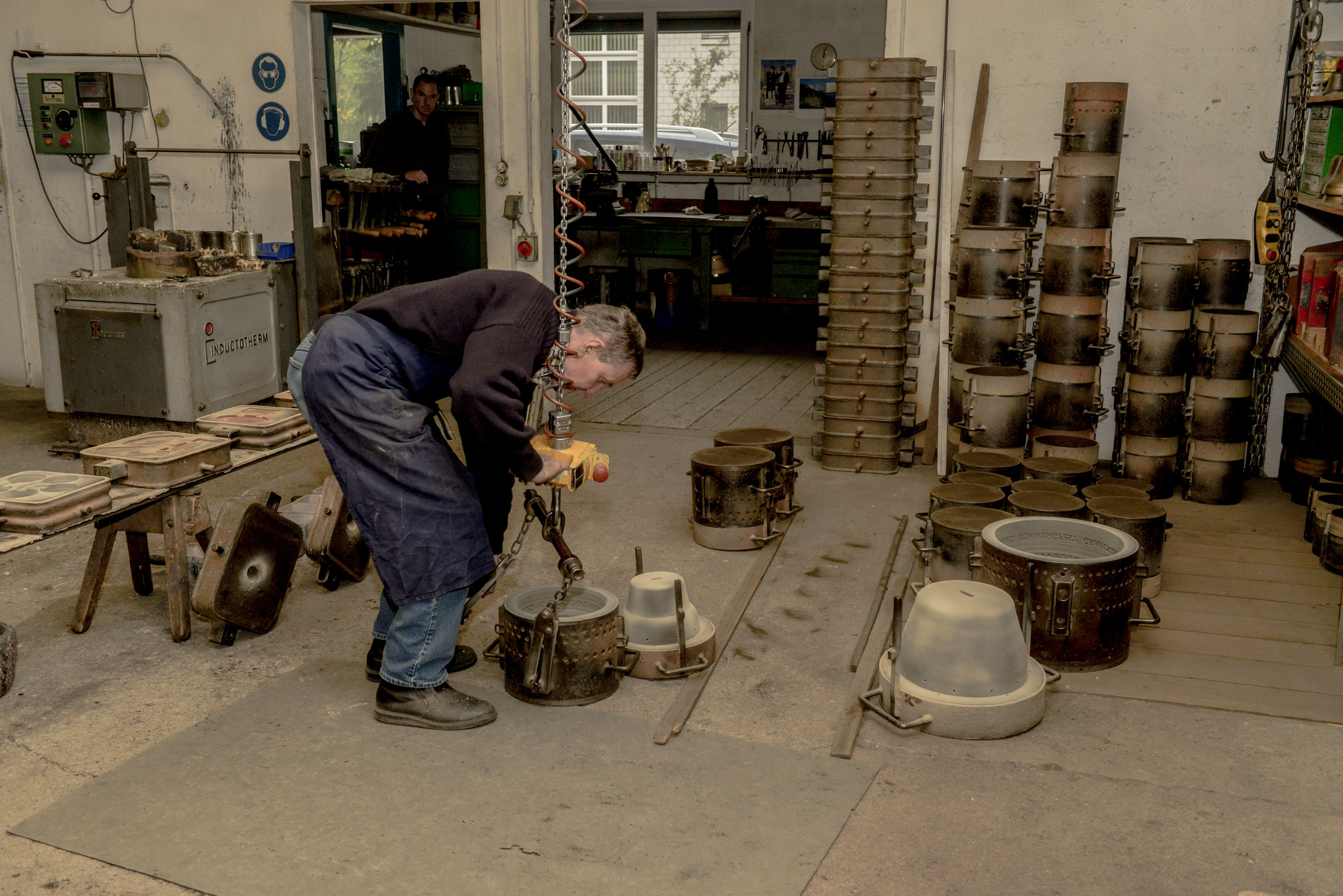
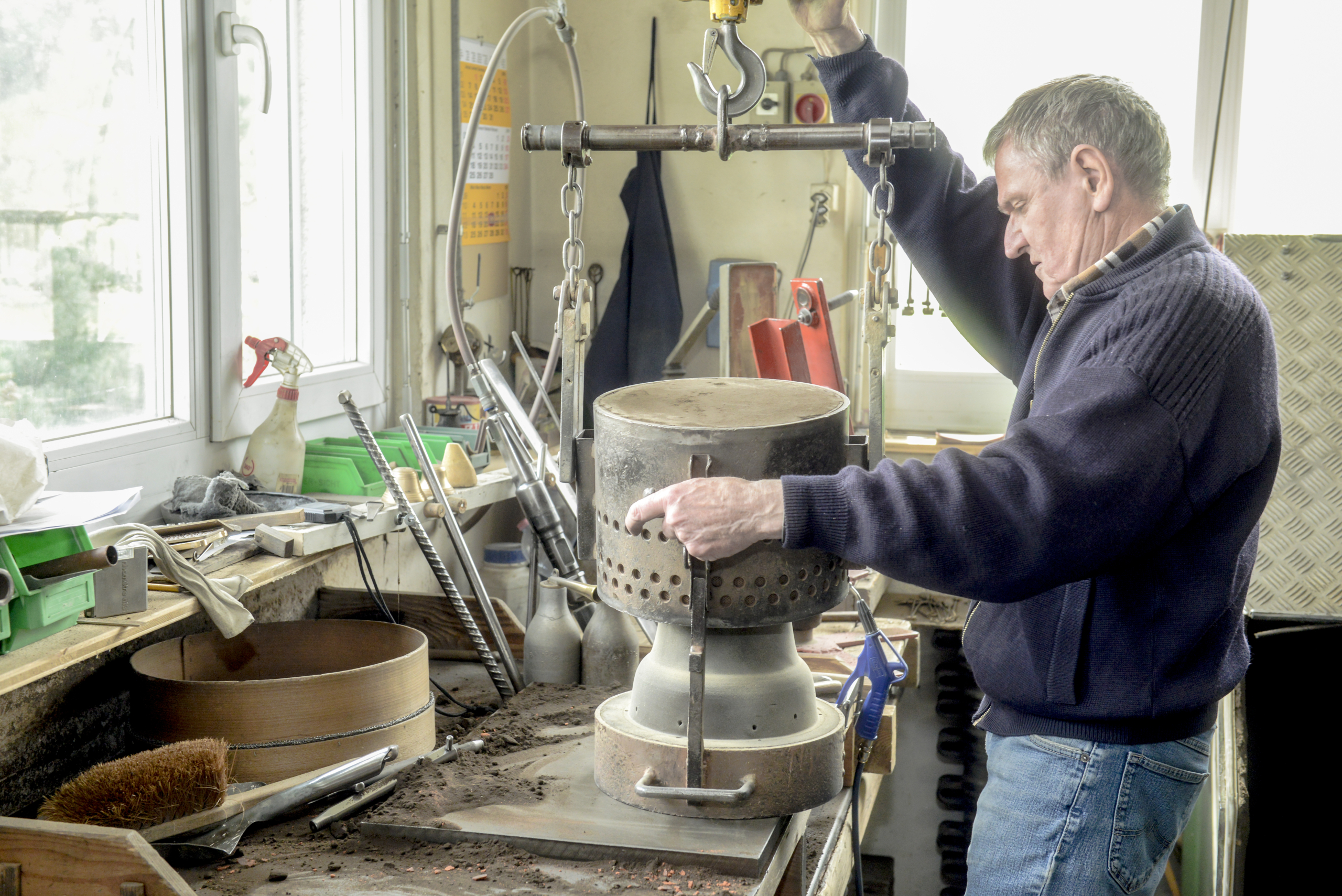
After resting and drying, the mould sections are joined and secured, ready for casting.
The moment of casting
“Glück auf!”
The casting begins.
Casting begins with the traditional foundry greeting. Molten bronze flows through the pouring channels into the sand mould, filling the space previously occupied by the bell pattern. The video shows casting at close range.
A close-up of casting: bronze fills the sand mould.
From raw casting to finished bell
Casting is just
the beginning.
04 / COOLING AND REMOVING THE MOULD
The bell is revealed
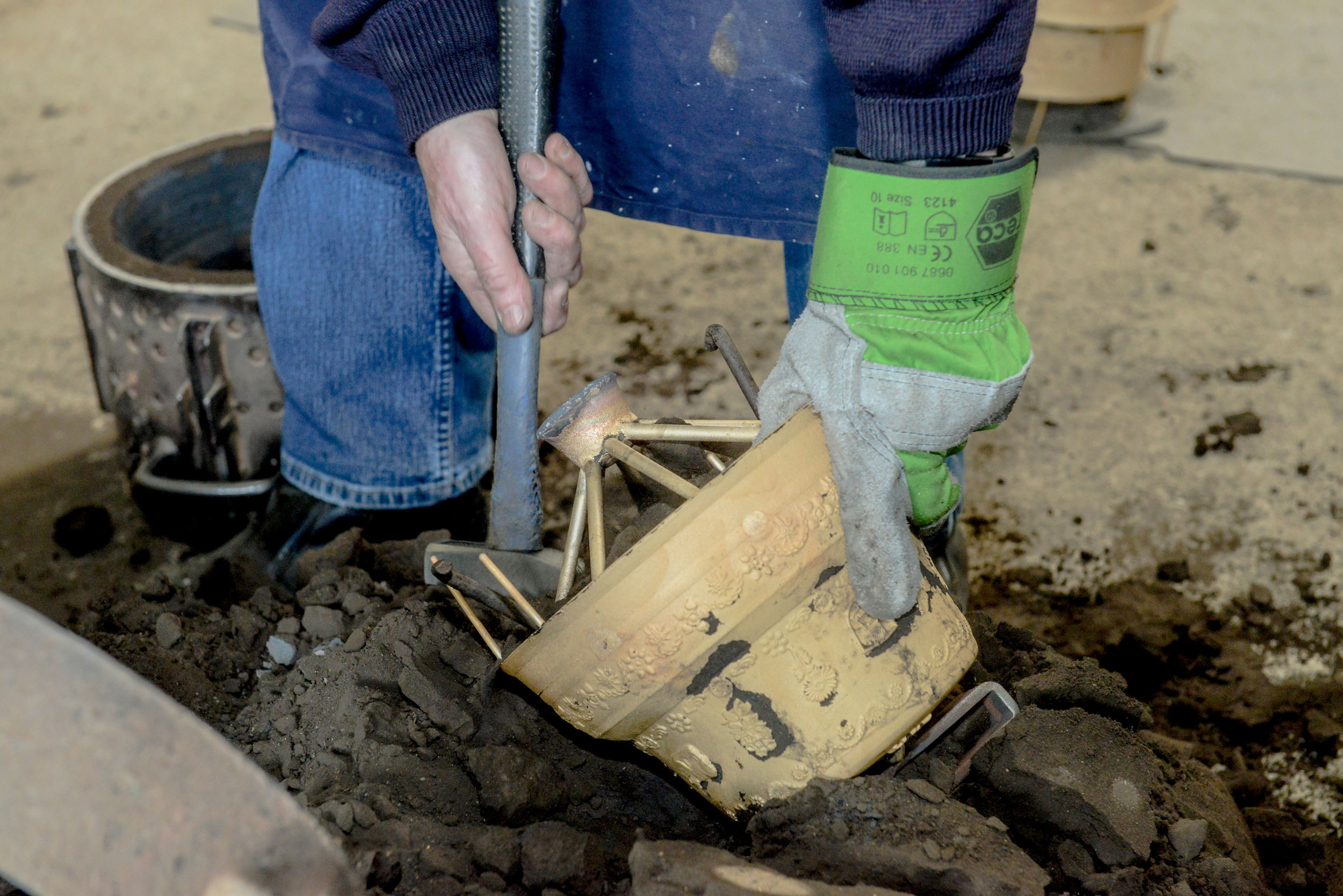
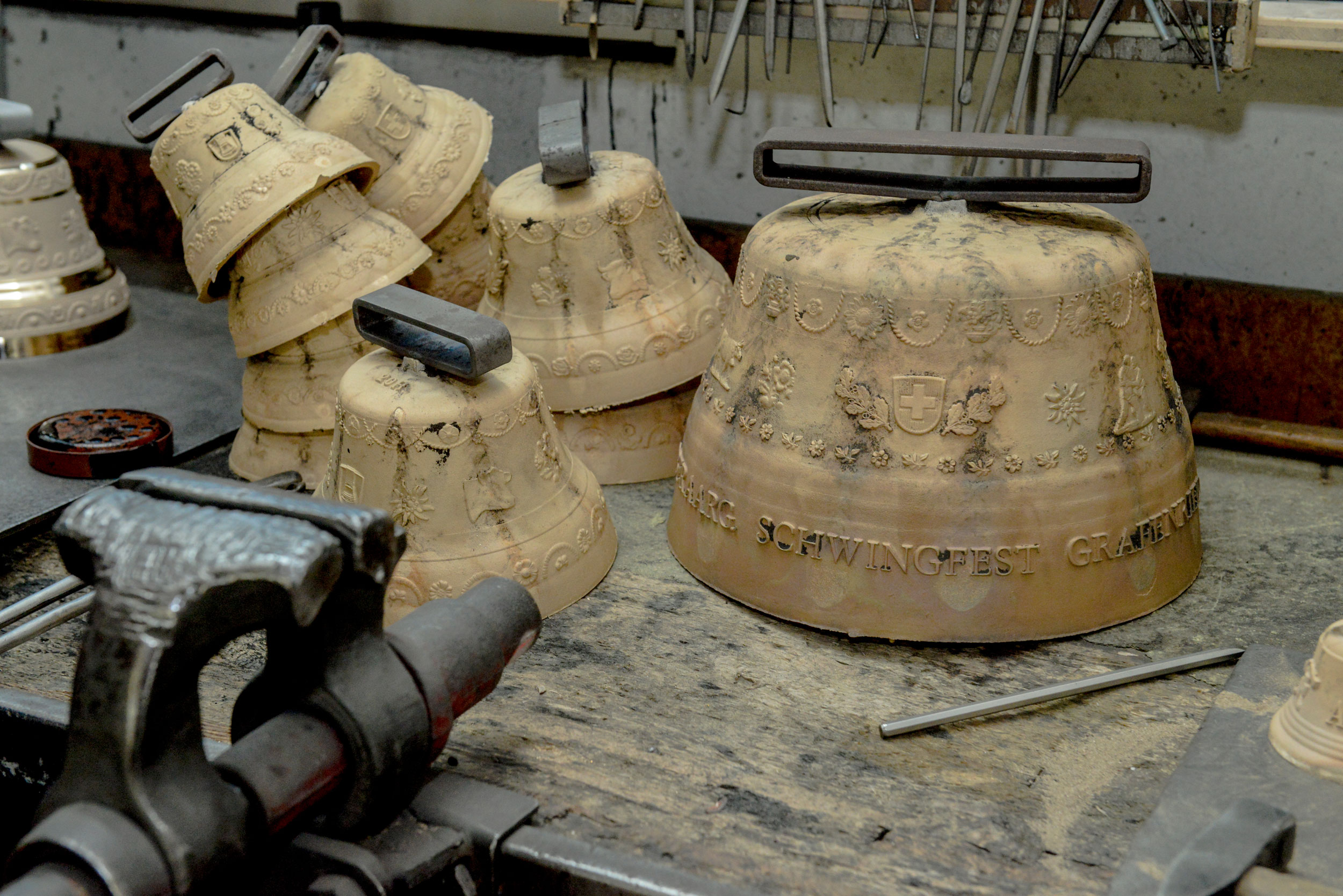
The moulds are left to cool. The bells are then freed from the sand, the pouring channels are removed and the raw castings are carefully inspected.
05 / THE SURFACE
Cleaning and finishing by hand
After sandblasting, the characteristic shiny bands are turned by hand on the lathe.
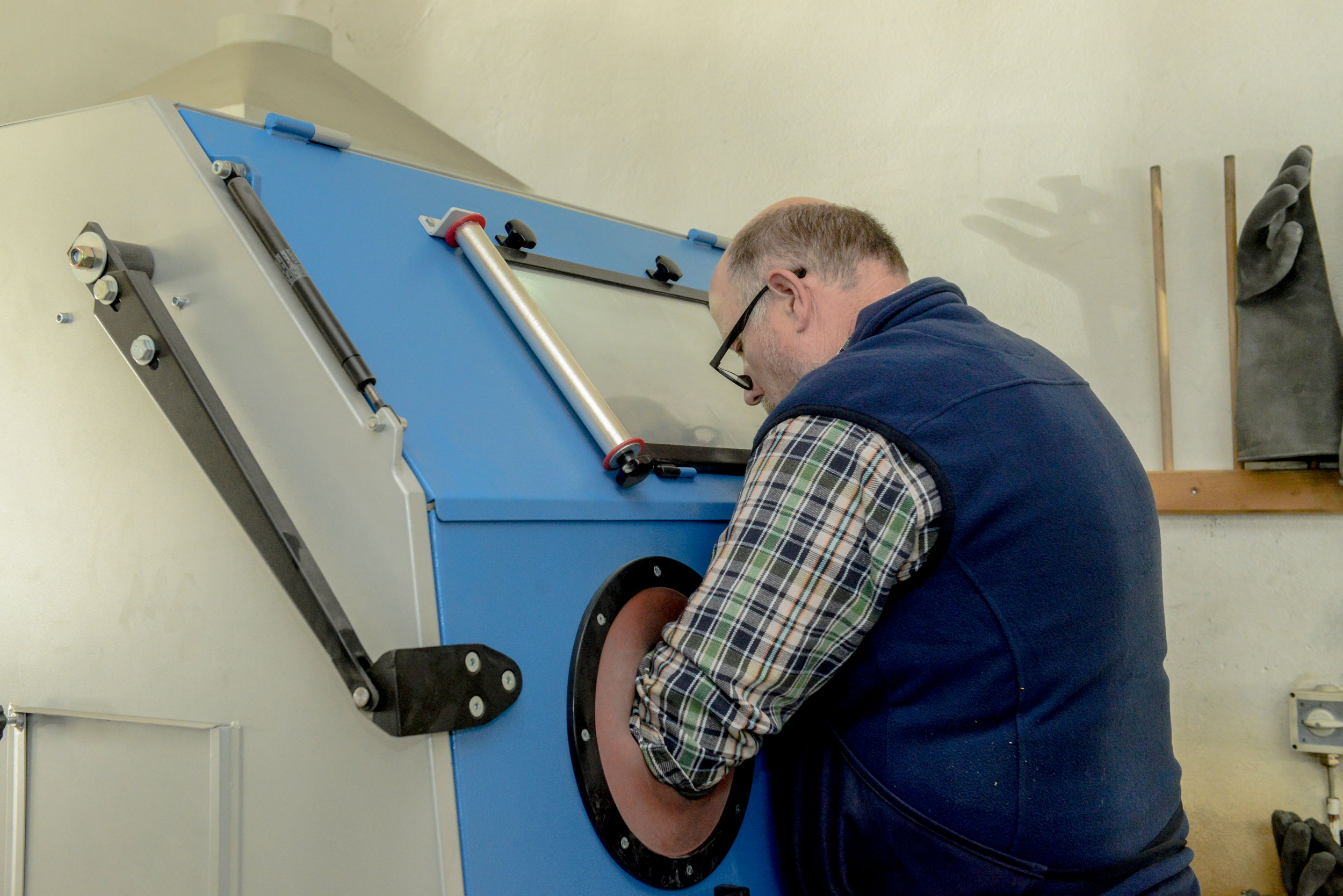
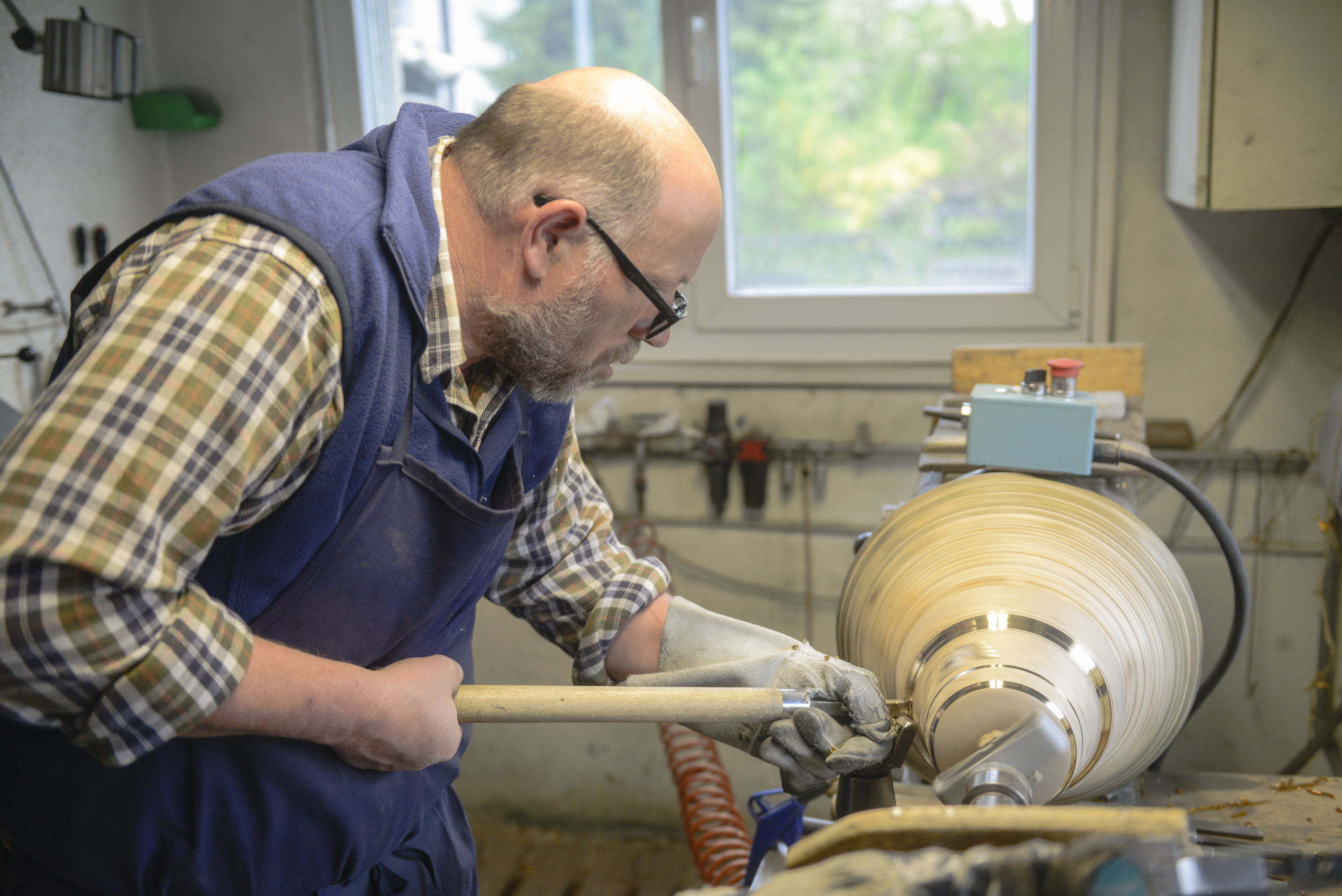
Sandblasting – inside the booth
This historical original recording shows the view from inside our sandblasting booth.
You are currently viewing a placeholder content from YouTube. To access the actual content, click the button below. Please note that doing so will share data with third-party providers.
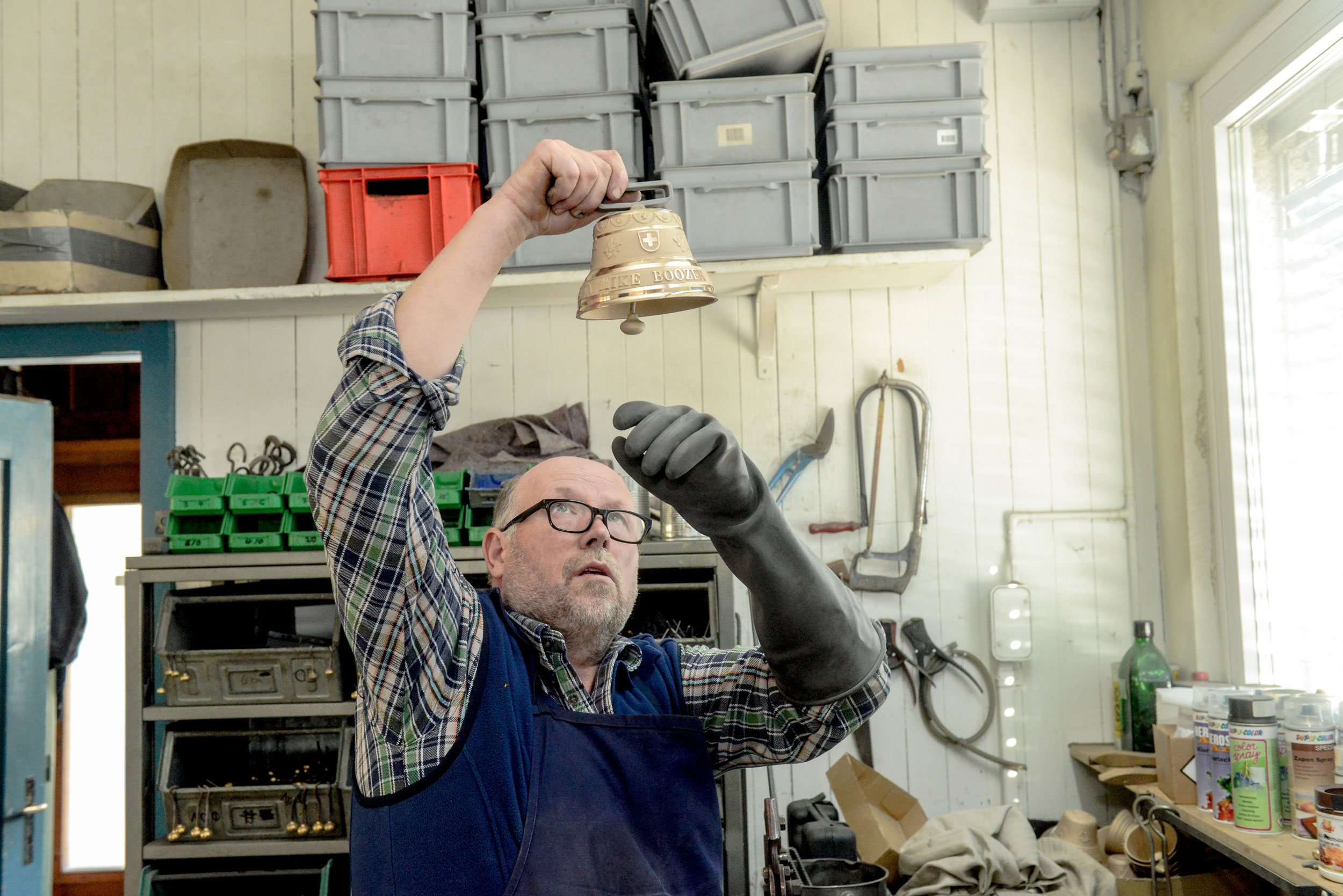
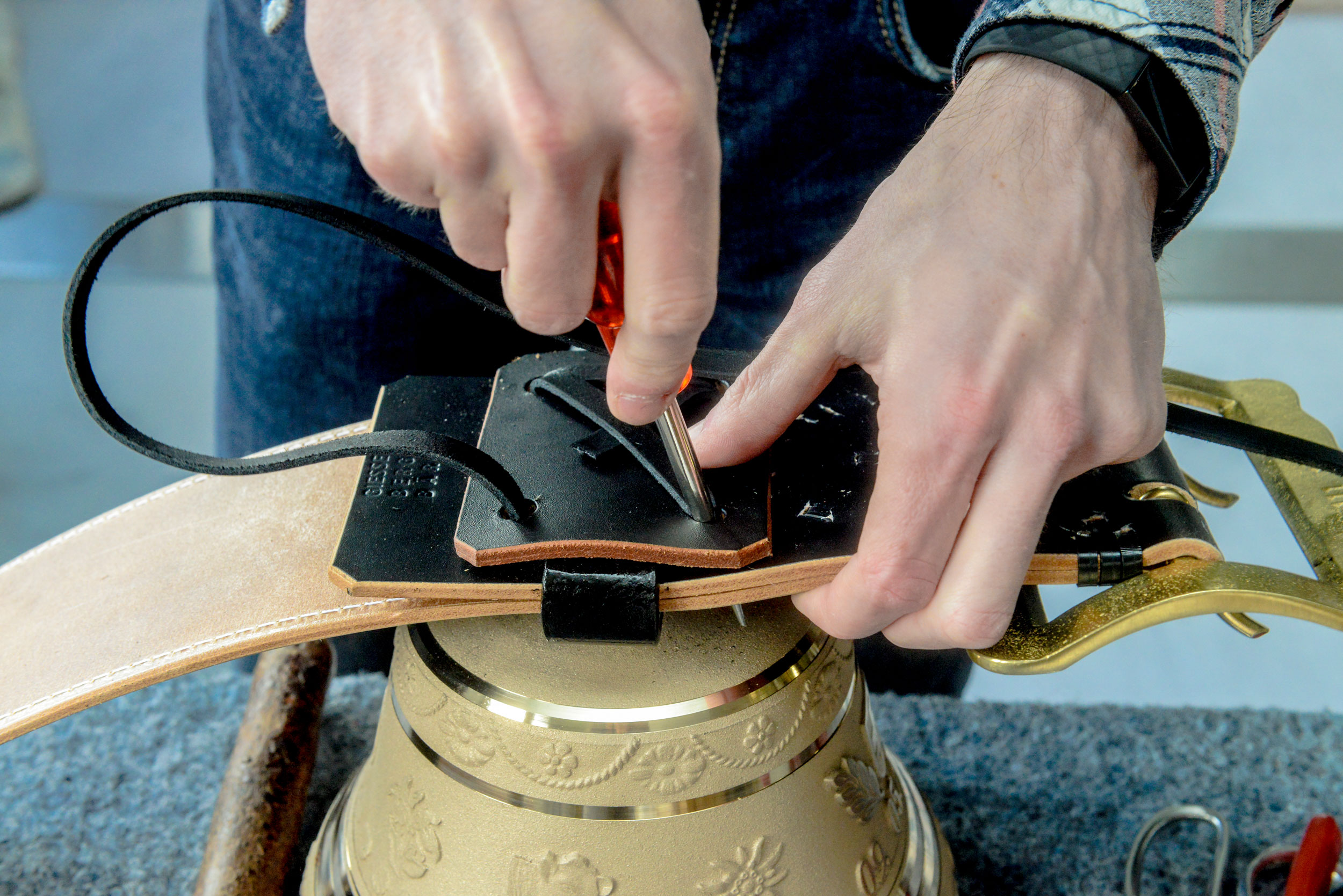
06 / THE FIRST SOUND
Checking the bell and attaching the strap
Finally, the workmanship and sound are checked and a suitable strap is attached.
Berger · Since 1730
Reusing moulding sand
and bronze.
After casting, the moulding sand is reconditioned for reuse. Suitable metal offcuts from our own production are melted down again.
Meet us in Bärau
The people behind
Berger bells.
Our team combines bell-making craftsmanship and tradition. Kerstin Milde and Roger Kern advise you on choosing your bell and a suitable leather strap.
From craftsmanship to your bell
Which sound
will accompany you?
For your herd, as a gift or for your club: tell us what you are looking for in a bell.
+41 34 408 38 38
info@glocken.ch
Glockengiesserei Berger GmbH · Bäraustrasse 8 · CH-3552 Bärau